I’m a content designer who tried product design. Here’s what happened
Product design and content design are different skillsets. Complementary? Absolutely. Related? Yes. Interchangeable? Hmm, maybe. Maybe not. 🤔
Many product designers are responsible for the UX writing in their flows. It’s a tale as old as time. It’s also pretty common for content designers to regularly use design systems and represent their ideas in UI.
But… I very much doubt any full-time product designers are doing end-to-end content design. And I very much doubt full-time content designers are also doing technical, detailed product design. Of course, all of this hinges on what your definitions of ‘product design’ and ‘content design’ are. If you only see product design as pictures and content design as words, then sure. One person could do both.
Who am I to comment on this? Well, I’ve seen lots of product designers trying their hand at content (to varying degrees of success). But very few accounts of the opposite: a content designer also doing product design. So, here’s what happened for me when I became both overnight.
Here’s what I did
As of writing this in May 2025 (re-published on my personal website in September 2025), I’m the only content designer in my business unit. There are lots of other lovely content designers in the company who I check in with, but I’m solely responsible for the content design in my corner of eBay. I collaborate with 3 product designers who each own a workstream and I stay across everything holistically.
But earlier last year, we had 4 workstreams and just 3 product designers. You see the problem, here?
After some chats with my line manager, I stepped in. I wanted to up-skill in UI and see how I felt in a product design role — with support from the product designers when I needed it, of course. It felt like a no-brainer. I could become embedded in a squad, work closely with a dedicated product manager, and deeply understand a specific user journey. A content designer’s dream, no?
So, I started attending the squad stand-ups. Being in ‘trio’ meetings with the PM and tech lead. And worked towards preparing a Figma file for dev handover (with varying degrees of polish, admittedly).
The pros
People got to see that content design is so much more than words. It’s mapping user journeys. Being strategic and intentional about landing the right message. Hierarchy and IA. Wireframing. I mean, even just straight up designing. When you have a great design system you can do a lot more of the UI work.
I got to practice a new(ish) skill. I’d always enjoyed a bit of visual design, but never got to fully own a space. IT IS HARD. But it was good to push myself a bit.
I built a stronger relationship with Product folks. And bonded with my product design partners.
Auto layout went from enemy number one to a friend.
I was becoming a stronger overall designer and could contribute more to wider discussions. Especially with other product designers. I was seeing outside of content and thinking about everything that fits around it.
Being candid for a sec? It probably helped the case for my promotion. Stepping up, taking responsibility, getting out of my comfort zone. All expected when you’re gearing up for a pay rise and new title.
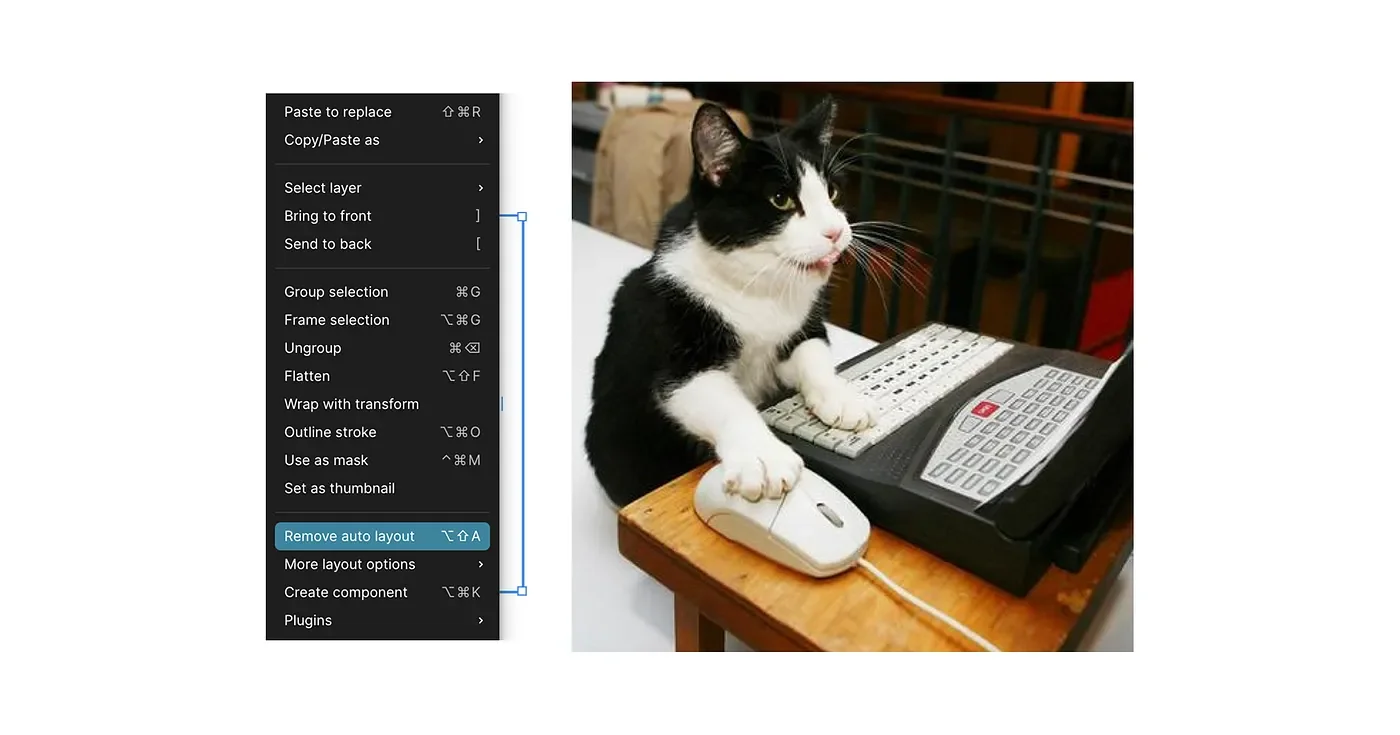
Me in every design file, pre-2024
The cons
I started out content-first, as I always preach, but it soon fell by the wayside. I was getting so excited over which interaction I should use, that I forgot to keep checking if it actually served information to the user in the easiest, clearest way (content design 101, lol).
As I was learning and trying new things, my brain let go of other stuff I’d usually think about. It simply didn’t have the space. Microcopy I’d normally sweat over, content hierarchy I’d normally question — I was glossing over the details because I had other things to worry about.
I lost track of other workstreams and projects. I was missing out on the birds-eye view of everything. As a perfectionist, this hurt me. But those other projects were also missing out. The content thinking wasn’t there.
Honestly, I started to feel a bit frazzled and lost. Since starting out as a content designer, all I wanted was ONE SQUAD and ONE PRODUCT. Then it was handed it to me and I felt overwhelmed. I realised that zooming out and being across multiple things is actually what I love. It feels satisfying.
Ultimately, it wasn’t sustainable.
In conclusion
On reflection, the pros and cons were pretty balanced. I’d say every content designer should give it a go if they get chance. As long as they have adequate support from the people around them. It’ll make you a stronger all-round designer.
But the last con is the realest. It’s just simply not sustainable for one person to do end-to-end content design and technical product design. Maybe if you’re working on a tiny feature or you’re an absolute superstar who drinks 15 espressos a day… but I just can’t see it. There will always be something that gets missed.
Some final thoughts
Being a specialist in an area of design is like working out in the gym. If you switch up your routine too much, you’ll lose the muscles you aren’t using. It’s hard to do EVERYTHING equally. The deeper I got into perfecting the visual design in my files, the more content design work I left on the shelf.
And when I switched back to being across everything as a holistic content designer, I actually started to forget some of the technical skills I’d picked up. Oops.
It would take A LOT for me to change my mind that product design and content design need each other and work best as a proper partnership. Not one person trying to do both half-heartedly. 🫶🏻
