The introvert comms playbook
I don’t speak up in meetings very often. I prefer a-sync messages. I just want to be alone with my blanket and a coffee and design stuff! I love getting together with my team, but I’m drained after a full day of collaboration.
I’ve worked with plenty of people who are the opposite to me. They constantly need to talk through things and work in a group and be around others — but it can be exhausting to keep up with. On the other end, I’ve also worked with people who are the exact same. It feels safe, but we could go days without hearing from each other. Things go unsaid.
The key to finding a balance is communication.
Why is it hard? Because working alone sometimes is easier. And faster. And less daunting when any social interaction drains your battery by 30%.
But why is it important? Because when we communicate well, we:
have more influence
naturally include others
feel more fulfilled
and get more shit done.
1. Watch out for silos
Be mindful of noticing when you slip into a silo. This could look like:
Starting a piece of work without speaking to anyone else
Getting quite far along in the design process without telling any other designers/people in your team
Taking 100% full ownership of part of the user journey, even though it affects other parts of the journey
Not being transparent with an idea you’ve had or an angle you want to explore
Avoid these traps. Instead, you can try these things:
Chat to people before you put pen to paper or open a blank Figma file — ask what they think about the problem or how they’d approach the task (you can send a quick message, it doesn’t have to be a long call!)
Tell your fellow designers as soon as you get a brief or problem statement. Ideally you’d be working on stuff as a team, but that’s not always realistic. You can meet halfway by letting your team know what’s coming up for you and when you’ll be starting it
Never think of a part of the user experience as ‘yours’. Think of yourself as a representative for that part, but embrace other designers contributing too. Your users shouldn’t feel the effect of squads (remember this and you’ll be on the right path)
2. Share early, no matter what
If you ever catch yourself saying “this is too early for a design crit”, you’re likely falling into the trap of bad communication.
Sketches over polished designs
One time, I added a blank screen to an existing flow. I showed that single blank screen in a crit, and spoke about what I thought was missing from the journey and what that blank screen could represent. It got people talking.
I’ve shared messy notes in a Google Doc. I’ve seen others share their sticky notes or rough drawings on paper.
The simpler the better. Ever shared a user flow in a crit and been met with crickets? It was probably too much for everyone to take in. Share one screen, one thought, one little seed of an idea at a time.
Little and often
For an introvert, presenting a project can be anxiety-inducing. This is always going to feel worse if it’s the first time you’ve spoken publicly about it. Sharing parts of the project — think ‘little and often’– is better than a big presentation at the end. It can help slowly build up your confidence, and just might encourage others to open up, too.
Try ad-hoc feedback time in your team. This is where you simply post stuff in Slack/Teams/whatever you use. No instant response required. Keep it casual.
Or, you could try a dedicated #design-feedback channel so it doesn’t get lost. You shouldn’t have to wait until scheduled crit time to ask for feedback or show what you’re doing.
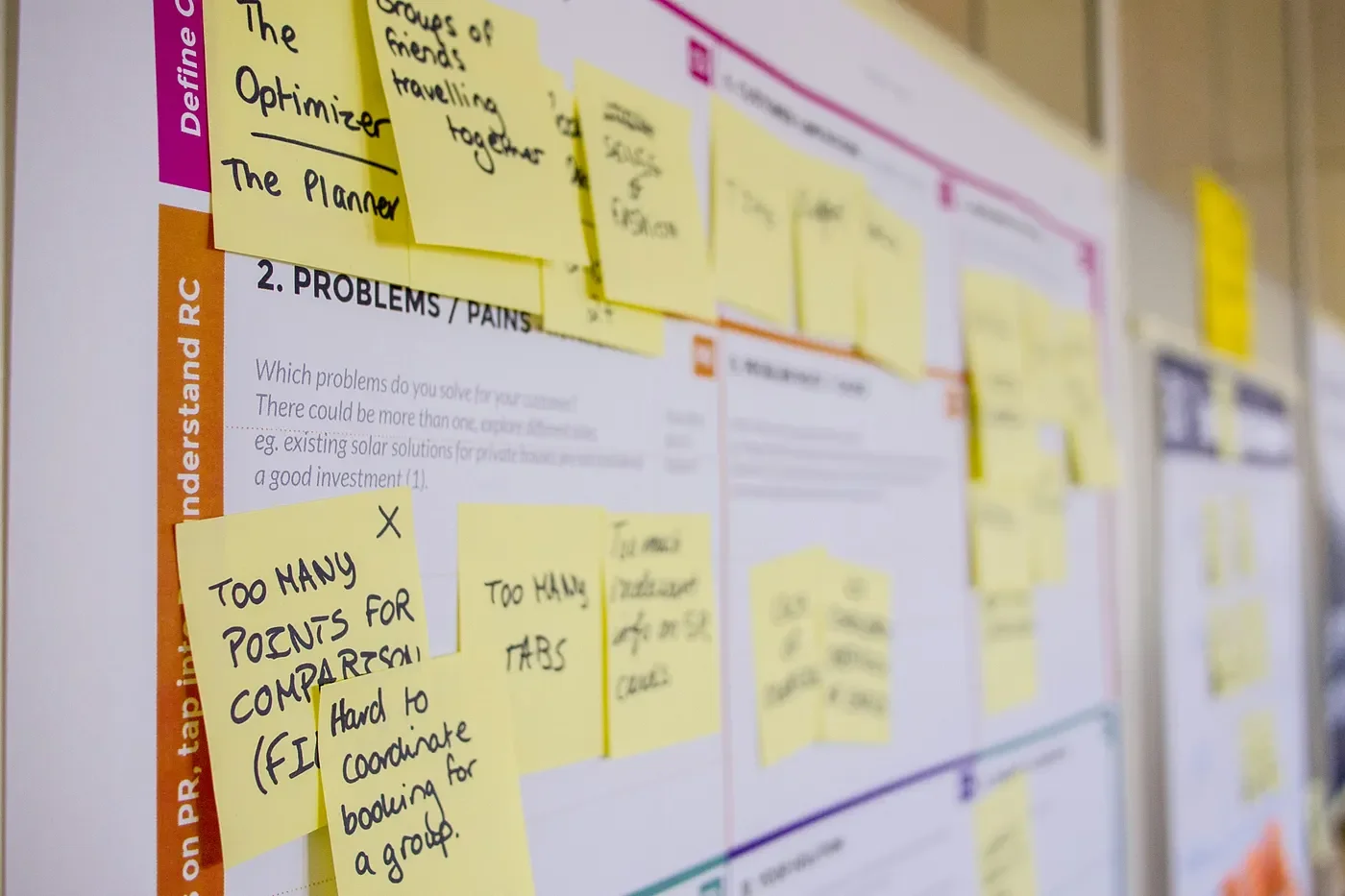
Photo by Daria Nepriakhina 🇺🇦 on Unsplash
Long story short: sharing actual end-to-end designs in a crit is the last thing you should do.
3. Embrace overcommunication
Over-communication doesn’t mean speaking louder and more often. That’s not in an introvert’s toolkit, and it doesn’t have to be.
Consider this: most people need to hear something 7 times before they actually understand it.
To tackle this, there’s 2 ways to overcommunicate (and do it well):
Repeat yourself — but be creative with it
Set the context, and never assume
As an example, let’s say you’re trying to promote an initiative in your department, or implement a new way of working for your team.
Some methods I like
From least to most effective, in my experience
A classic Slack or Teams announcement post. Avoid long walls of text (think of the TikTok attention span), use images or formatting to catch people’s attention and have a clear call-to-action — apply content design principles to your internal comms too!
A LinkedIn post or Medium article — if you can share externally what you’re working on. People can be resistant to Slack spam and more likely to miss internal messages. You can also tap into FOMO. If your colleagues see interest generated externally, they might be intrigued.
Set reminders and commit to regular updates. I use Slackbot and 10-minute slots in your calendar, for example. Hold yourself accountable to consistently inform your team (you can’t expect others to engage if you’re not committed!)
A good old one-pager. Summarise your initiative or idea into a succinct and well-structured document. Circulate it. Ask people to leave comments — no nerve-wracking presenting or gut-wrenching Q&A needed. This works well with stakeholders who don’t use Figma or can’t attend crits
A context-setting checklist
If people don’t get why you’re talking about something or what you’re trying to achieve, they’re more likely to switch off or get confused.
These tasks can help any time you meet with people, whether it’s for a workshop or a formal content review.
Outline the goal of the meeting (before you send any invites)
Send the agenda ahead of time
Set the scene at the start. What’s out of scope? What decisions have been made so far? Is there any useful research or data to share?
Reflect on if the goal has been met at the end — and be honest if it hasn’t
Only share next steps you can actually commit to
Afterwards, send out a quick write-up or summary of what happened (another article on this coming soon!)
I promise, it’s always appreciated.
When you make things clearer for other people, you come across as more confident. Meetings without a purpose are basically a day-ruiner for introverts.

Photo by Jason Leung on Unsplash
4. Find your allies
Communication is easier when you have allies. Finding a few key people who really support and inspire you is often more effective than trying to win everyone over (which is exhausting, btw, and not introvert-friendly).
You’ll be pleased to know, you don’t have to do your networking in terrifying crowds and at meet-ups.
Opposites attract
Work out the extroverts in your team. Get to know them. Team up with them on a project. Use your individual strengths to make things happen.
I once had a great experience of this. We worked on a strategy together and shared the responsibility of making it happen. The best part? If I got put on the spot in a meeting, they’d jump in and support me. Their voice was louder than mine, but we always sung from the same hymn sheet.
Look outside your safe space
Confession time: I used to think other designers were my only true allies. But now, my greatest partnerships over the past few years have been with product managers, marketing folks and engineers.
Talk to people outside your discipline. It might be scary to reach out, but it’ll get easier each time you do it.
Listening to and learning from different people will improve your communication. And this leads me to my final thought…
5. Give people options
We’re not communicating at the highest level if we don’t consider how the people around us work best. And we’re all different, so being flexible and giving options really helps. It’s a gentle, thoughtful form of communication. Perfect for introverts, really.
Here are some examples of questions you can ask next time you’ve got a review with a stakeholder or a workshop with peers:
“How would you prefer to view this? PDF, Figma link, screenshots or a Word doc?”
“How would you prefer to give feedback? Comments on a doc, a list of notes in Slack, in an email, chat through on a call?” (An exception for legal feedback — keep that written down and saved!)
“What type of meeting works best for you? Zoom or grab a coffee in the office?”
“I’d like to have a look at {insert thing here}. Do you want to chat through it together beforehand, or shall I design some options and send them over a-sync?”
A couple of ‘let’s be realistic’ disclaimers
Options don’t always work in times when you need to make a quick decision. And sometimes you cannot be flexible. You might not have time to present something other than the format it’s already in.
You don’t need to always give people options, but try doing it every now and then. See what happens.
None of this is one-size-fits-all. This is just a collection of methods I’ve refined over the years and wanted to share. And remember, the best communication starts with listening, which us introverts are pretty well-versed in. ❤️
